
To keep long nails clean, wash beneath them with soap and running water whenever you wash your hands, use a soft nailbrush for visible buildup, and dry them thoroughly afterward. Avoid digging under the nails with sharp tools, as this can injure the sensitive skin or separate the nail from the nail bed.
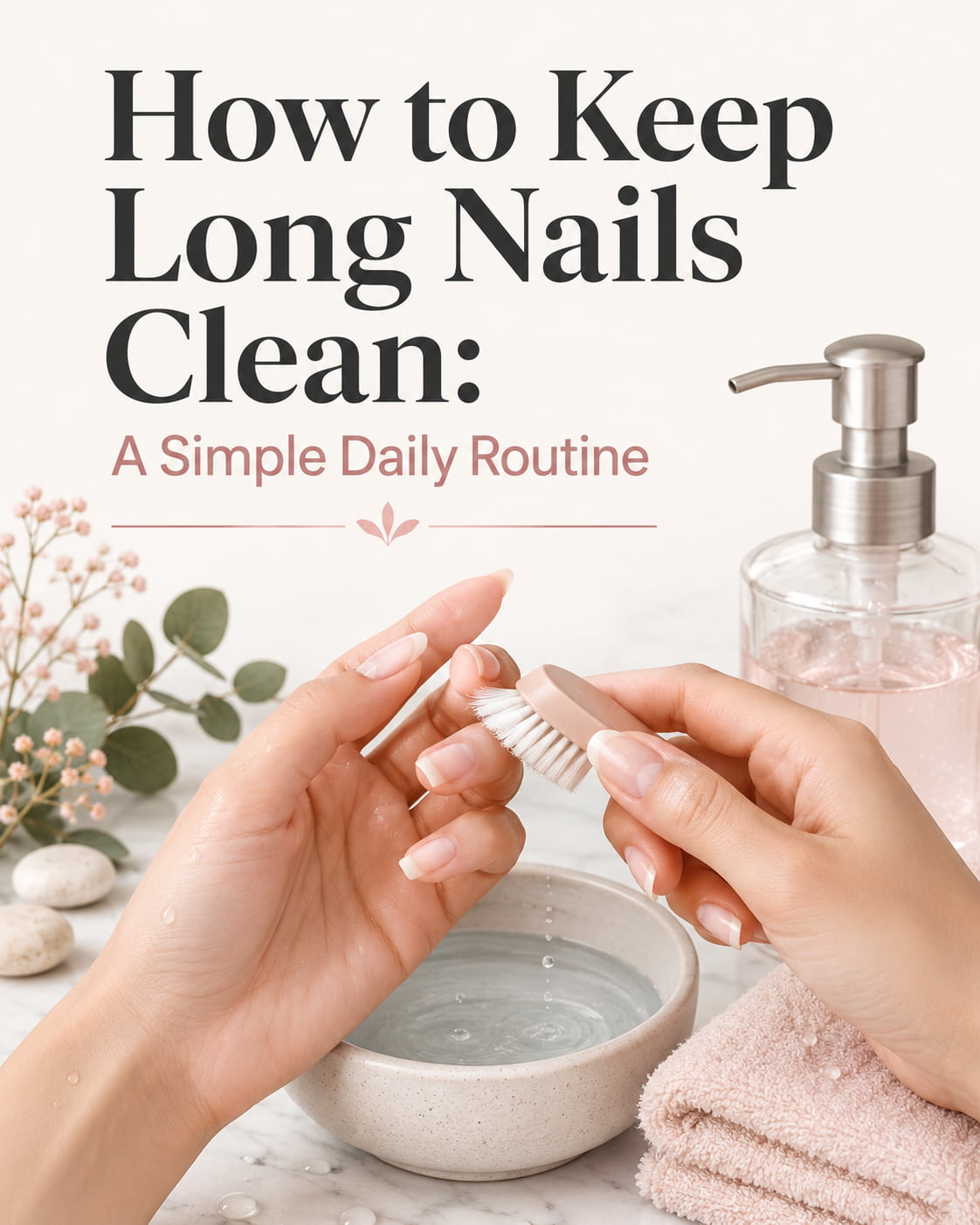
Long nails can be kept clean, but they require more attention than short nails. The Centers for Disease Control and Prevention (CDC) notes that more dirt and bacteria can collect beneath longer nails. A simple routine, protective gloves, and clean manicure tools can make nail care much easier.
How to Keep Long Nails Clean in 5 Steps
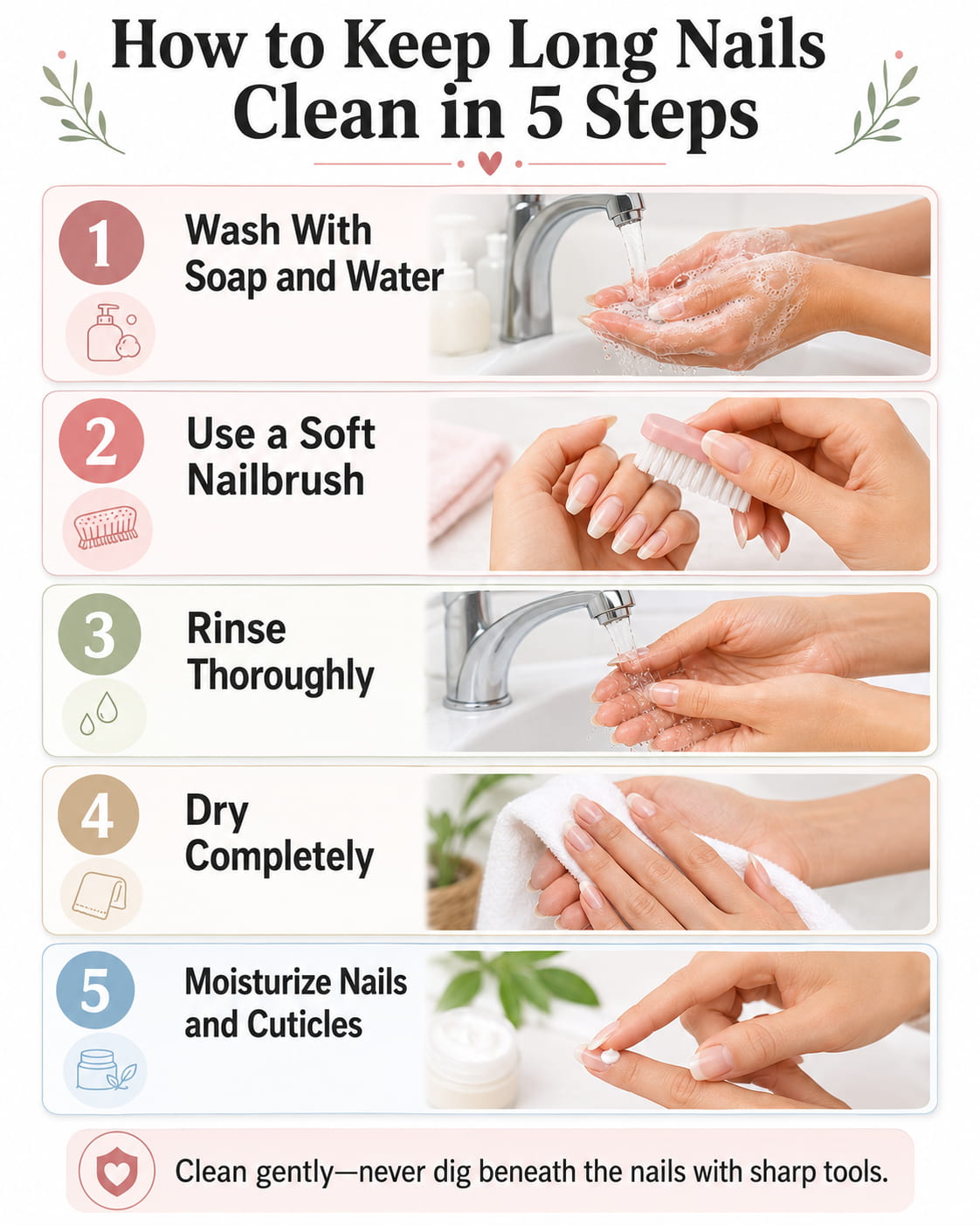
You do not need harsh chemicals or complicated equipment. For everyday cleaning, soap, clean running water, a soft brush, and a clean towel are usually enough.
1. Wash Your Hands With Soap and Running Water
Wet your hands with clean running water and apply regular hand soap. Rub your hands together to create a full lather.
Make sure the soap reaches:
- Your palms and the backs of your hands
- Between your fingers
- Around the cuticles
- Across your fingertips
- Beneath the free edges of your nails
Scrub for at least 20 seconds, then rinse thoroughly. According to the CDC handwashing instructions, cleaning under the fingernails should be part of every complete handwashing routine.
Warm water is not required. Clean warm or cold running water can both be used.
2. Use a Soft Nailbrush for Visible Dirt
When soap and handwashing do not remove visible debris, gently clean beneath the nail tips with a soft nailbrush.
Apply soap to the damp brush, then lightly brush underneath each nail. Move the brush along the exposed underside rather than forcing it deeply toward the nail bed.
The NHS nail-care guidance recommends using a soft nailbrush and avoiding sharp objects beneath the nails.
A nailbrush should feel soft against the skin. Stiff or rough bristles can irritate the area beneath long nails, especially when used aggressively.
3. Rinse Away Soap and Loosened Debris
Hold your fingertips beneath clean running water to rinse away loosened dirt and soap.
Check the underside of each nail in good lighting. If debris remains, repeat the gentle brushing rather than scraping at it.
Do not keep brushing until the skin feels sore. Excessive cleaning can irritate the nail bed and the skin surrounding the nail.
4. Dry Your Hands and Nails Thoroughly
Pat your hands dry with a clean towel. Pay particular attention to the fingertips, nail folds, and undersides of long nails.
Moisture can remain beneath curved or artificial nails, so give these areas extra time to dry. The American Academy of Dermatology advises drying hands well because nails that stay wet for extended periods may become more vulnerable to nail problems.
Do not repeatedly push paper towels, cotton swabs, or other materials deep beneath the nails. Small fibers may catch underneath the free edge.
5. Moisturize the Nails and Cuticles
Frequent washing can dry the nails, fingertips, and cuticles. After drying, apply a small amount of hand cream or fragrance-free moisturizer around the nails and cuticles.
Moisturizing helps nails remain flexible and may reduce dryness and splitting. Avoid packing thick lotion underneath the nail tips, where it may mix with debris.
Best Tools for Cleaning Long Nails
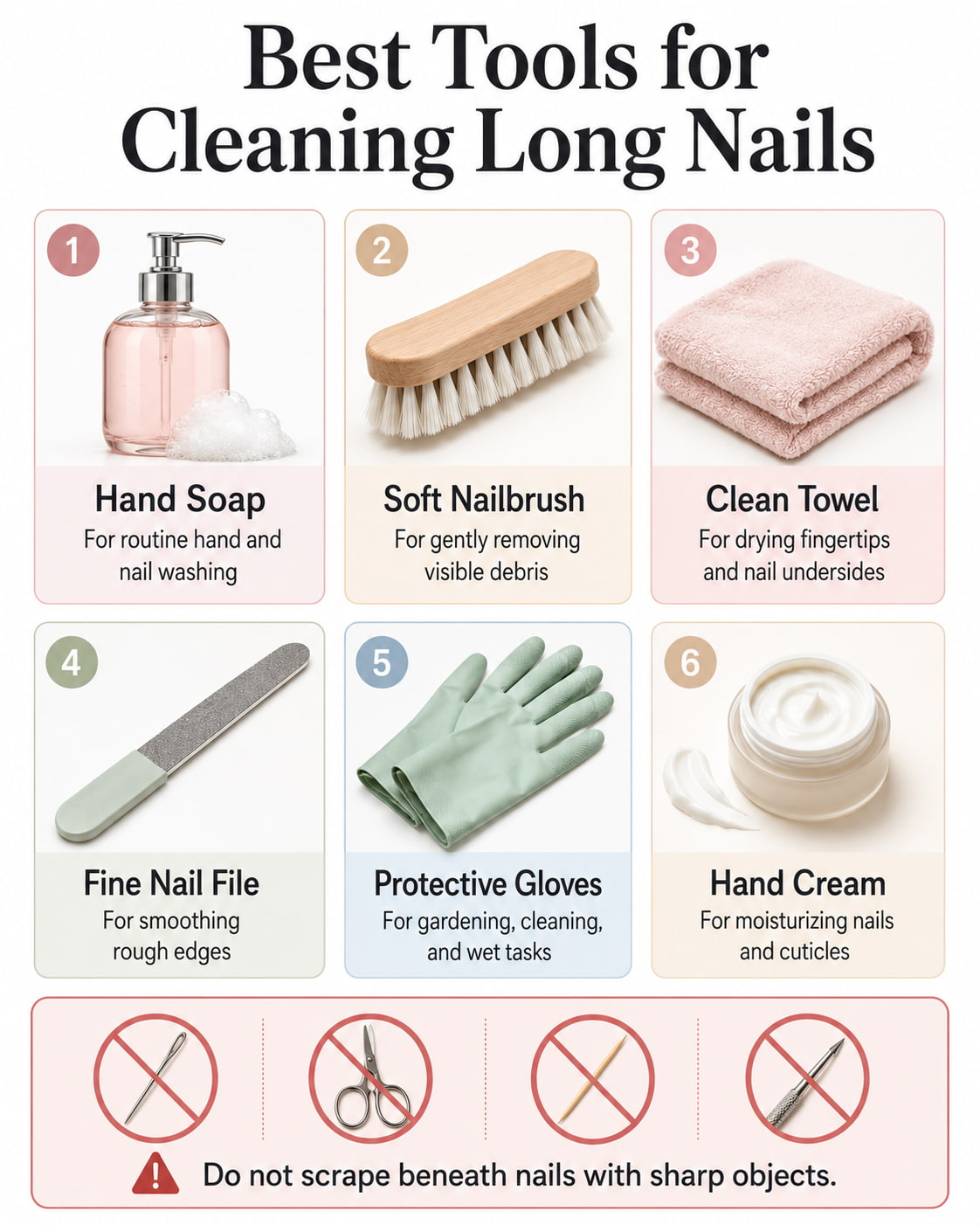
You only need a few basic supplies.
| Tool | How to use it |
|---|---|
| Hand soap | Use during every complete handwashing routine |
| Soft nailbrush | Gently remove visible debris beneath the free edge |
| Clean towel | Dry the hands, nail folds, and nail tips thoroughly |
| Nail file | Smooth rough edges that may trap debris or catch on objects |
| Clean nail clippers | Remove broken or damaged edges when necessary |
| Protective gloves | Reduce staining and buildup during messy or wet tasks |
| Hand cream | Moisturize nails and surrounding skin after washing |
Rinse your nailbrush after each use and leave it in an open area where it can dry completely. Do not share personal nailbrushes, clippers, or files.
Clean grooming tools before using them. The CDC specifically recommends cleaning tools such as nail clippers and files before nail care.
What Not to Use Under Long Nails
The skin beneath the free edge of a nail is sensitive. Aggressive cleaning can cause small injuries that make the area painful and more vulnerable to infection.
Avoid cleaning beneath your nails with:
- Pins or needles
- Scissors
- Metal cuticle pushers
- Toothpicks
- Pointed manicure tools
- Other sharp household objects
Do not scrape deeply, even when dirt seems difficult to remove. Soak your fingertips briefly during normal handwashing and use a soft brush instead.
You should also avoid cutting or forcefully pushing back your cuticles. Cuticles form a protective seal between the nail and surrounding skin. Damaging that seal may allow bacteria and other germs to enter.
How to Prevent Dirt From Collecting Under Long Nails
Preventing buildup is usually easier than removing it later.
Wear Gloves During Messy Tasks
Wear protective gloves when:
- Gardening or handling soil
- Washing dishes
- Cleaning with household products
- Painting or completing craft projects
- Working with grease or mechanical materials
- Handling foods that stain easily
Gloves reduce direct contact with dirt, colored ingredients, detergents, and water. Remove them carefully, wash your hands afterward, and allow the gloves to dry before using them again.
The NHS recommends gloves when hands are frequently exposed to water or cleaning products.
Keep the Shape Smooth
File rough, chipped, or uneven edges before they catch on fabric or collect debris. Use a fine nail file and work gently.
Keeping long nails does not mean allowing damaged tips to remain. Shortening a badly cracked nail may prevent a deeper and more painful break.
Wash After High-Contact Activities
Give your nails extra attention after:
- Using the toilet
- Handling garbage
- Touching animals, pet food, or animal waste
- Gardening
- Preparing raw food
- Coughing, sneezing, or blowing your nose
- Caring for a wound or someone who is ill
These are among the important times when the CDC recommends washing hands with soap and water.
Avoid Biting and Picking
Biting your nails or pulling at the skin around them can create small injuries. Clip hangnails carefully with clean clippers instead of tearing them.
How to Clean Acrylic, Gel, and Press-On Nails
Artificial nails need the same basic hygiene routine as natural nails: soap, running water, gentle brushing when needed, and thorough drying.
Follow these precautions:
- Use a soft brush beneath the exposed free edge.
- Do not force a brush or tool between the enhancement and natural nail.
- Do not pry at areas that have started lifting.
- Keep manicure tools clean.
- Ask salon staff how shared equipment is cleaned.
- Do not allow cuticles to be cut during routine appointments.
- Avoid applying another enhancement over a painful, damaged, or discolored nail.
Artificial nails can make it more difficult to notice problems developing underneath. The American Academy of Dermatology warns that covering damaged nails may worsen an existing problem. It also recommends avoiding cuticle trimming because the cuticle helps protect against infection.
Contact your nail technician if an enhancement lifts, cracks, or separates. Seek medical advice rather than salon treatment when you also have pain, swelling, warmth, pus, or unexplained discoloration.
How Often Should You Clean Long Nails?
Clean beneath long nails as part of your regular handwashing routine, especially when they are visibly dirty.
A separate deep-cleaning session is not usually necessary every day. Repeated soaking, hard scrubbing, and aggressive scraping can leave the skin sore.
A practical schedule is:
- During regular handwashing: Lather beneath the nails.
- When dirt is visible: Add a soft nailbrush.
- After messy activities: Wash and inspect the nail tips.
- After washing: Dry thoroughly and moisturize.
- Before nail care: Clean your clippers, files, and other tools.
Hand sanitizer containing at least 60% alcohol can help when soap and water are unavailable. However, soap and water are preferable when the hands or nails are visibly dirty.
Why Do My Nails Still Look Dirty After Washing?
Darkness or discoloration beneath a nail is not always removable dirt.
Possible explanations include:
- Polish staining
- Residue from dark-colored products
- Debris trapped beneath a partially lifted nail
- Bruising from an injury
- Changes related to a nail or skin condition
- A possible bacterial or fungal infection
Do not repeatedly scrape an area that does not come clean with gentle washing. The NHS advises seeking medical advice when a nail changes color or shape without an obvious reason, especially when the surrounding skin is also sore, red, swollen, or warm.
When to See a Dermatologist
Contact a healthcare professional if you notice:
- Increasing pain around a nail
- Red, warm, or swollen skin
- Pus or fluid
- A nail lifting away from the nail bed
- Persistent green, yellow, brown, or dark discoloration
- A nail becoming unusually thick, crumbly, or misshapen
- Symptoms that continue or become worse
Painful redness and swelling around the nail may indicate paronychia, an infection of the skin surrounding the nail. MedlinePlus notes that bacterial paronychia may also produce pus-filled blisters, while other cases can develop more gradually.
Seek prompt medical care if redness spreads along the finger or hand, or if nail symptoms occur with fever or feeling seriously unwell.
Frequently Asked Questions
Can long nails be hygienic?
Yes, long nails can be kept clean with careful handwashing, gentle brushing, regular tool cleaning, and thorough drying. However, more dirt and bacteria can collect beneath long nails than short nails, so they require greater attention.
What is the safest way to clean under long nails?
Wash with soap and running water, then use a soft nailbrush if visible debris remains. Brush gently along the free edge and avoid inserting sharp tools beneath the nail.
Can I use a toothbrush to clean my nails?
A clean, soft-bristled brush may work, but a small nailbrush is usually easier to control. Do not use a brush with stiff, worn, or spreading bristles, and do not share it with other people.
Does hand sanitizer clean underneath fingernails?
Hand sanitizer can reduce germs on the hands when soap and water are unavailable, but it may not remove visible dirt or debris beneath long nails. Wash with soap and running water whenever your hands are visibly dirty.
How do I keep acrylic nails clean underneath?
Wash normally, allow soap and water to reach beneath the tips, and use a soft brush without prying at the enhancement. Dry carefully. Have lifting or cracking repaired rather than pushing tools into the gap.
Should I clean under my nails every day?
Yes. Lather beneath your nails whenever you wash your hands. A nailbrush is only necessary when visible debris remains or after a particularly messy activity.
Why is there green discoloration under my nail?
Green discoloration may be more than ordinary dirt, particularly when the nail has lifted or an artificial enhancement has trapped moisture. Do not cover it with more polish or another artificial nail. Arrange an assessment with a healthcare professional or dermatologist.
Final Takeaway
Keeping long nails clean comes down to consistency rather than aggressive scrubbing. Wash beneath them with soap and running water, use a soft nailbrush only when necessary, dry them carefully, and protect them with gloves during messy tasks.
Check your nails regularly. Persistent discoloration, lifting, pain, swelling, warmth, or pus deserves medical attention rather than repeated cleaning or cosmetic coverage.
References
- CDC: Healthy Habits—Nail Hygiene
- CDC: About Handwashing
- NHS: Nail Problems
- American Academy of Dermatology: Artificial Nails—Tips for Reducing Nail Damage.
- MedlinePlus: Paronychia
This content is for informational purposes only and not medical advice.