
You usually cannot remove existing fingernail ridges immediately, but gentle nail care can make them less noticeable and help healthier nails grow. Mild vertical ridges are common, especially with age. Deep horizontal grooves may indicate that nail growth was temporarily interrupted and sometimes require medical evaluation.
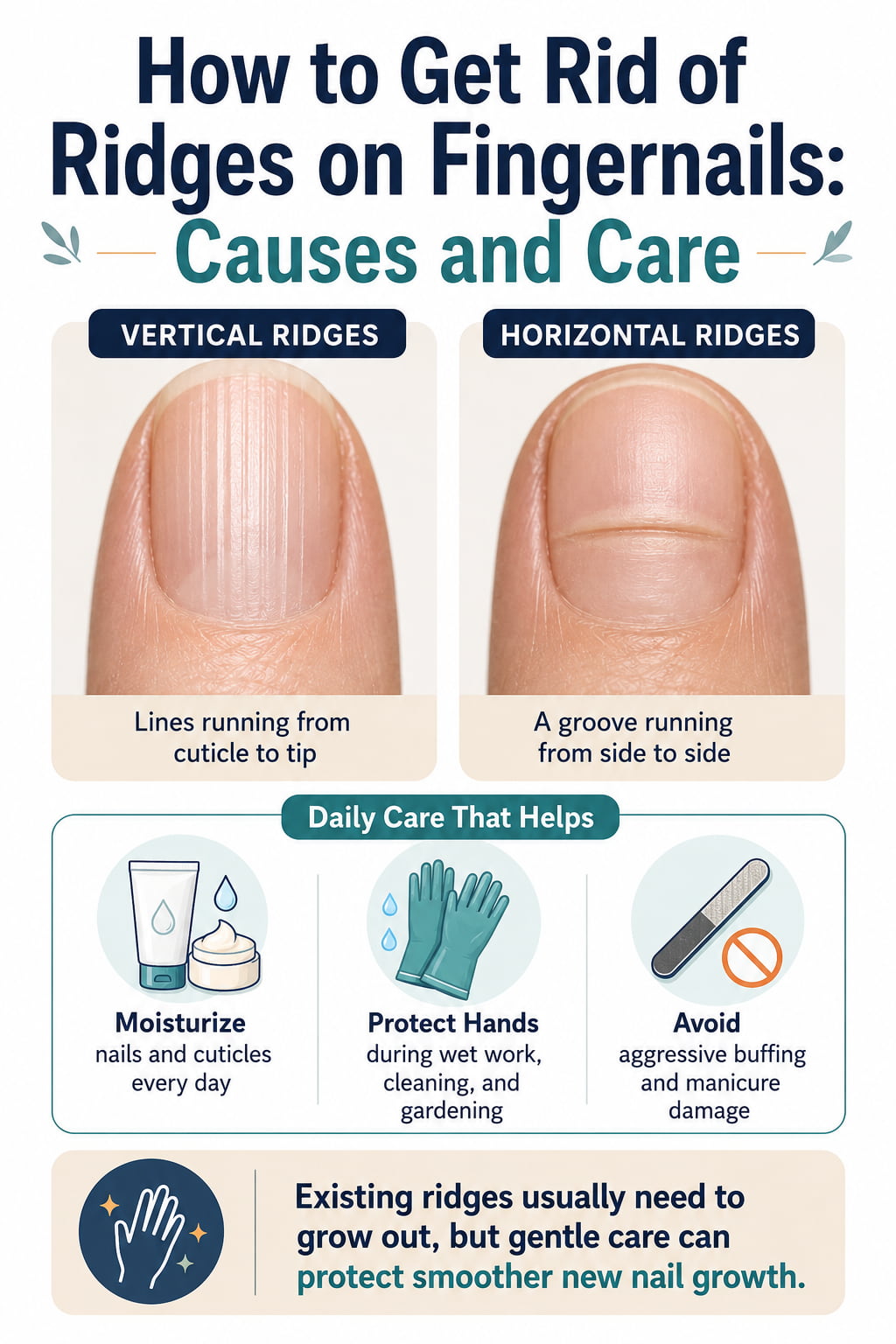
Learning how to get rid of ridges on fingernails starts with identifying which direction the lines run. Moisturizing, protecting your hands, avoiding damaging manicure practices, and addressing an underlying condition can improve future nail growth. However, the existing ridged section generally has to grow out.
Can You Completely Get Rid of Fingernail Ridges?
Whether fingernail ridges improve depends on their cause.
Age-related vertical ridges may remain visible because they are part of the nail’s natural growth pattern. Moisturizing and protecting the nail can reduce dryness, splitting, and roughness, but these steps may not make the nail completely smooth.
Ridges caused by an injury, illness, manicure damage, or another temporary problem may gradually disappear as a new nail grows from the base.
A cosmetic product such as a ridge-filling base coat can create a smoother appearance, but it does not treat the underlying cause.
Vertical vs. Horizontal Fingernail Ridges
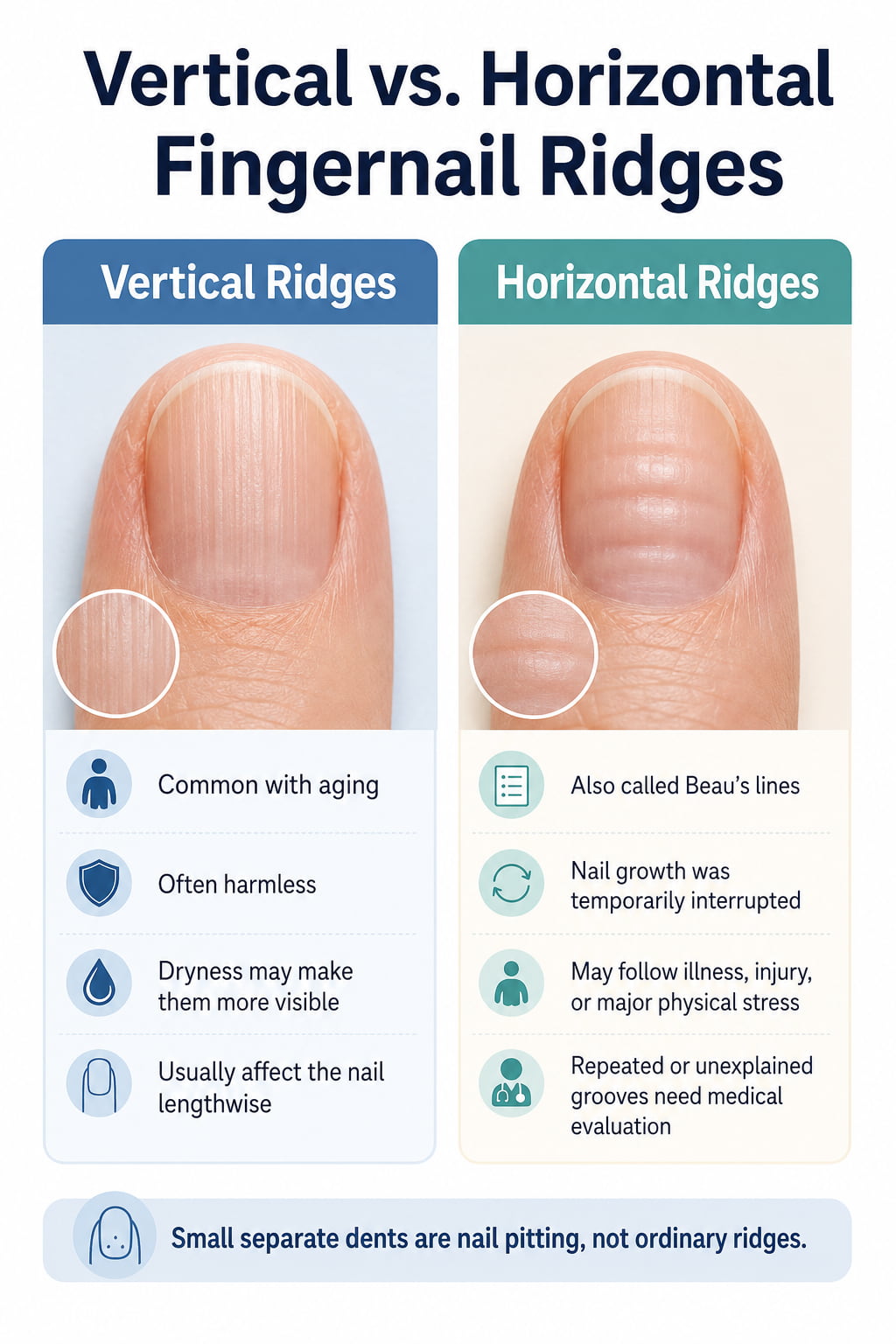
The direction of the ridge provides an important clue.
| Type of ridge | Appearance | Common meaning |
|---|---|---|
| Vertical ridges | Lines from the cuticle to the nail tip | Often associated with normal aging, dryness, or repeated minor damage |
| Horizontal ridges | Grooves running across the nail | May occur when nail growth temporarily slows or stops |
| Nail pitting | Small, separate dents in the nail | May be associated with psoriasis, eczema, or alopecia areata |
| Central split or groove | A line or channel, often on a thumbnail | May result from repeated picking, rubbing, or trauma near the cuticle |
According to the American Academy of Dermatology’s guidance on nail changes, lines running along the length of a nail are common and usually not concerning. Deep grooves running across the nail are known as Beau’s lines and indicate that nail growth slowed or stopped for a period.
What Causes Ridges on Fingernails?
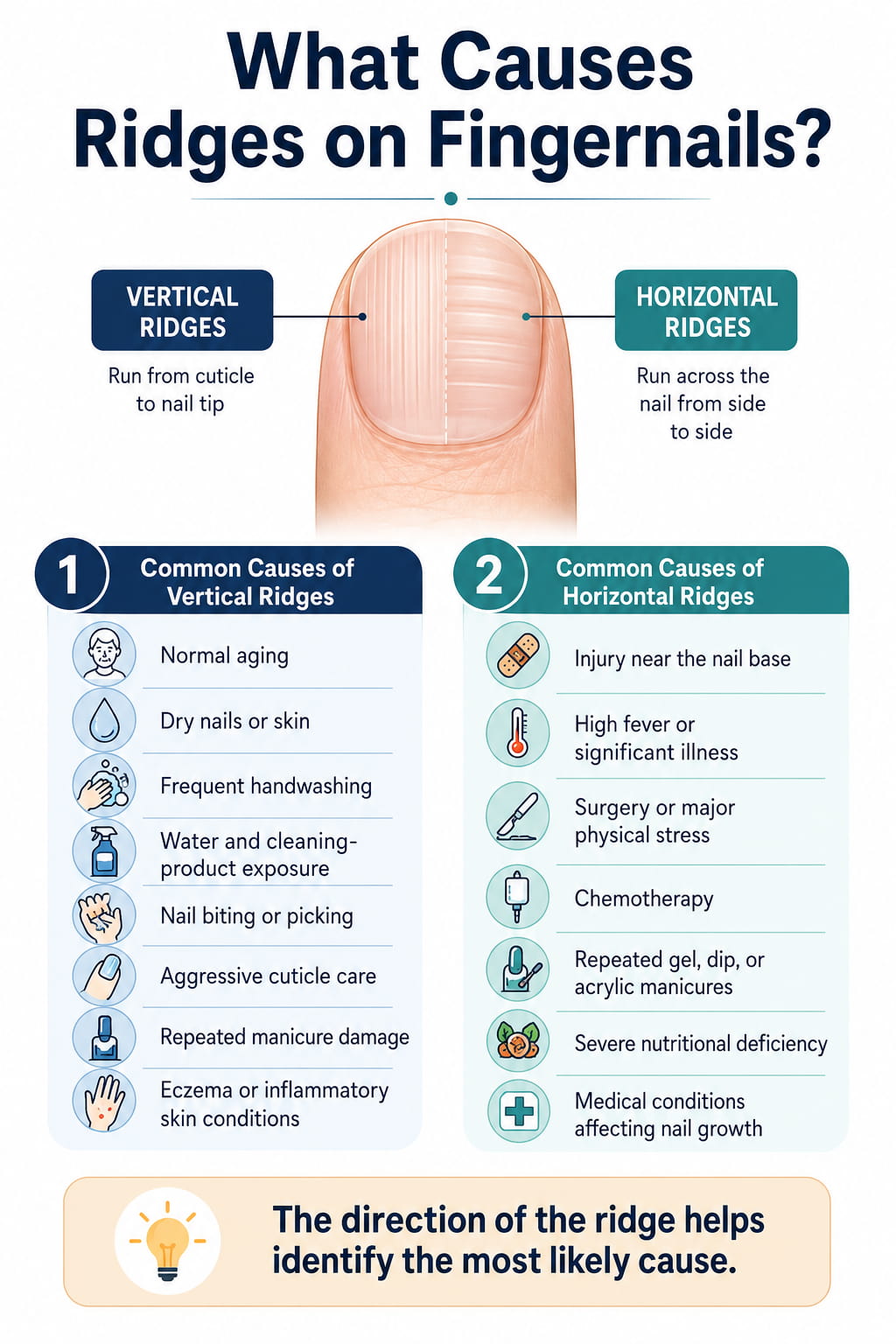
Common Causes of Vertical Ridges
Vertical ridges run from the bottom of the nail toward the fingertip. They often become more noticeable as people get older.
Possible contributors include:
- Normal aging
- Dry nails or dry surrounding skin
- Frequent handwashing
- Repeated exposure to water or cleaning products
- Nail biting or picking
- Aggressive cuticle care
- Repeated manicures or polish removal
- Eczema or other inflammatory skin conditions
Vertical ridges alone are not a reliable sign of a vitamin deficiency or disease. Changes such as severe brittleness, spoon-shaped nails, discoloration, lifting, pain, or changes affecting several nails may provide more meaningful information.
The MedlinePlus guide to nail abnormalities notes that normal aging affects nail growth. It also lists moisture exposure, injury, skin conditions, infections, thyroid disorders, nutritional problems, and certain medications among the possible causes of abnormal nail texture.
Common Causes of Horizontal Ridges
Horizontal grooves are often called Beau’s lines. They develop when nail production at the nail matrix—the area beneath the skin where the nail begins growing—is temporarily disrupted.
Possible causes include:
- An injury near the base of the nail
- A high fever or significant illness
- Major surgery or physical stress
- Chemotherapy
- Eczema around the nail
- Repeated gel, dip, or acrylic manicures
- Severe nutritional deficiency
- Medical conditions that affect nail growth
A horizontal ridge on one nail may follow a local injury. Similar grooves appearing across several nails can suggest that a broader event affected nail growth.
You may not notice a Beau’s line immediately. The groove becomes visible later as the nail grows forward.
How to Get Rid of Ridges on Fingernails Safely
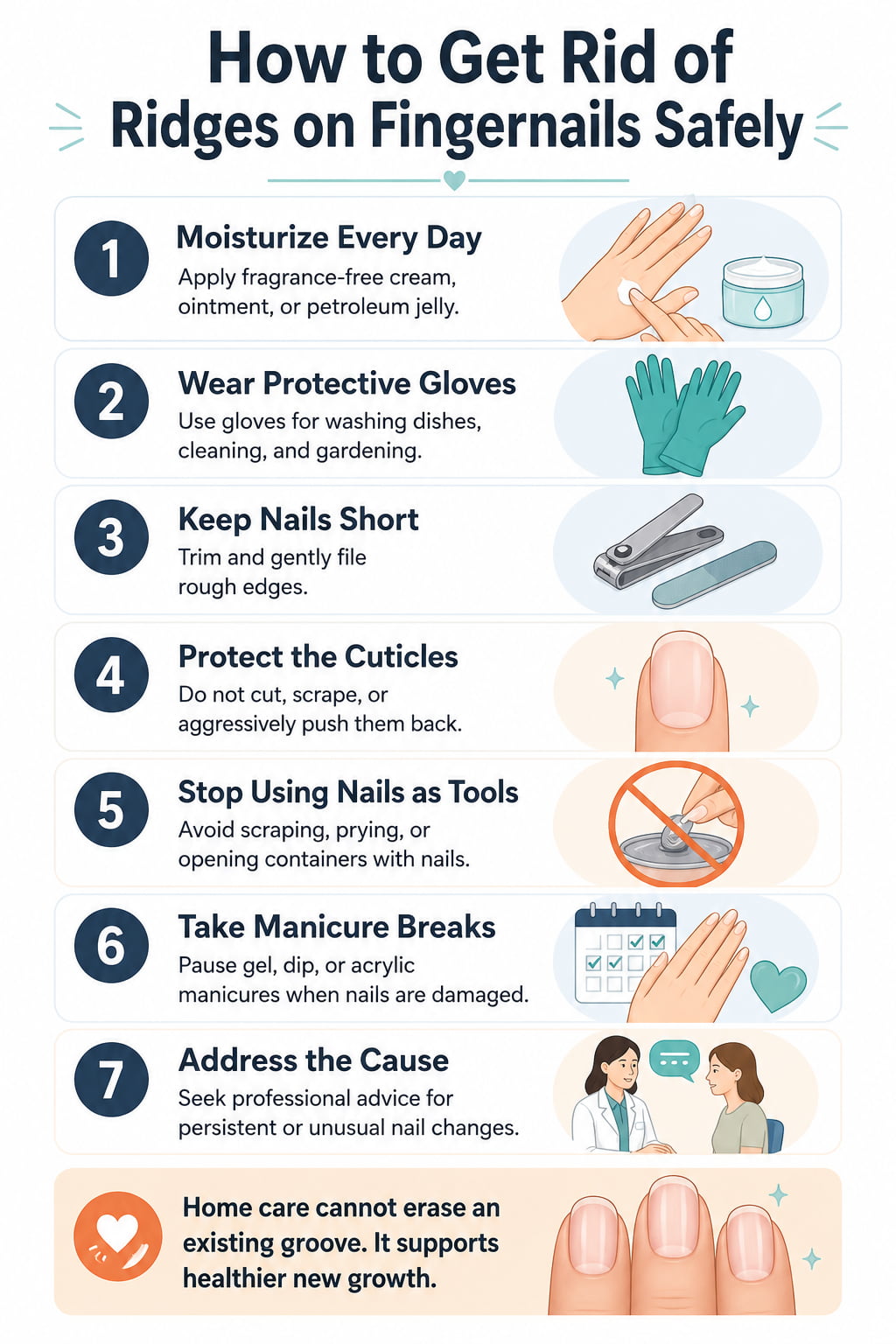
Home care cannot erase an already-formed groove, but it can prevent additional damage and support smoother, stronger growth.
1. Moisturize Your Nails Every Day
Apply a thick, fragrance-free hand cream, ointment, or petroleum jelly to your nails and cuticles.
Good times to moisturize include:
- After washing your hands
- After bathing or showering
- After using nail polish remover
- Before going to bed
Massage the product gently over the nail plate, cuticle, and surrounding skin. Moisturizer does not rebuild the existing nail, but it can improve flexibility and reduce dryness, peeling, and splitting.
2. Wear Gloves for Wet or Messy Work
Frequent cycles of wetting and drying can weaken nails. Wear protective gloves when:
- Washing dishes
- Cleaning with household products
- Gardening
- Handling chemicals
- Keeping your hands in water for extended periods
Cotton-lined household gloves may feel more comfortable during longer cleaning tasks.
The American Academy of Dermatology recommends keeping nails clean and dry, wearing gloves during wet work, moisturizing after handwashing, and avoiding cuticle removal as part of its healthy nail-care guidance.
3. Keep Nails Short and Smooth
Shorter nails are less likely to bend, catch, or split along a ridge.
Use clean, sharp clippers and gently file rough edges in one direction. Do not tear off snags or peeling pieces, as this can remove healthy layers of the nail.
4. Leave Your Cuticles Alone
Cuticles help protect the area where new nail forms. Cutting, scraping, or aggressively pushing them back may cause inflammation, infection, or irregular nail growth.
Do not pick the skin near the base of the nail. Repeated rubbing or picking can create a persistent central ridge or split, particularly on the thumbnails.
5. Stop Using Your Nails as Tools
Opening containers, scraping labels, pressing buttons, and prying objects with your nails can worsen ridges, splitting, and lifting.
Use an appropriate tool instead. Small changes in daily habits can prevent repeated trauma that interferes with smoother growth.
6. Take a Break From Gel, Dip, or Acrylic Nails
Manicures can temporarily conceal ridges, but repeated filing, picking, scraping, acetone exposure, and artificial nail removal may make weakened nails worse.
Do not peel off gel or dip polish. Removing it this way can pull away layers of the natural nail.
If your nails are brittle or damaged, leave them bare for at least one to two weeks and moisturize them several times daily. The American Academy of Dermatology’s gel manicure advice recommends polish breaks and petroleum jelly between manicures to reduce brittleness and chipping.
7. Treat an Identified Underlying Cause
If a dermatologist or other healthcare professional identifies eczema, psoriasis, an infection, iron deficiency, thyroid disease, or another condition, treating that problem may support healthier nail growth.
Do not start iron, zinc, or other high-dose supplements solely because you see nail ridges. A clinician may recommend blood tests when your nail changes occur with relevant symptoms or risk factors.
Should You Buff Ridges on Your Fingernails?
Very light buffing may temporarily soften the appearance of shallow vertical ridges. However, buffing removes part of the nail’s surface.
Frequent or aggressive buffing can leave nails thinner, weaker, and more sensitive. Avoid trying to grind a deep groove completely flat.
A safer cosmetic approach is to:
- Moisturize the nail.
- Apply a ridge-filling base coat.
- Add regular nail polish if desired.
- Remove the polish gently rather than scraping or peeling it off.
Do not buff nails that are already thin, peeling, painful, cracked, or lifting.
Do Biotin or Vitamins Help Fingernail Ridges?
Biotin is frequently marketed for hair, skin, and nails, but it is not a proven treatment for ordinary fingernail ridges.
The National Institutes of Health Office of Dietary Supplements reports that evidence supporting biotin for nail health is limited and that more research is needed, particularly in healthy people.
Biotin supplements can also interfere with certain laboratory tests. Depending on the test, they may produce falsely high or falsely low results. This can affect some thyroid, hormone, vitamin D, and cardiac troponin tests.
The U.S. Food and Drug Administration continues to warn that biotin in supplements can significantly interfere with some lab tests. Tell your healthcare professional and laboratory staff about any hair, skin, and nail supplements you take before testing.
Iron, zinc, folate, protein, or other nutrients may matter when a true deficiency exists. However, taking supplements without confirming a deficiency may not improve the ridges and can create side effects or nutrient imbalances.
A balanced eating pattern generally provides better support for nail growth. Include appropriate sources of:
- Protein
- Iron
- Zinc
- Vitamin B12
- Folate
- Healthy fats
Seek personalized advice if you follow a restrictive diet, have digestive problems, have experienced unexplained weight loss, or have symptoms of anemia.
How Long Do Fingernail Ridges Take to Grow Out?
Fingernails grow slowly. It takes approximately six months for a fingernail to grow out completely, although growth rates vary.
A ridge caused by a past injury or illness should gradually move toward the fingertip. You can trim it away once it reaches the end of the nail.
Improvement may take longer when the cause continues. For example, repeated trauma near the cuticle can keep producing the same groove.
The American Academy of Dermatology notes that a fingernail takes about six months to grow out fully.
When to See a Doctor or Dermatologist
Arrange a medical evaluation when:
- Deep horizontal grooves appear without a known cause.
- Horizontal ridges repeatedly develop.
- Several nails change at the same time.
- A nail becomes painful, swollen, warm, or red.
- The nail starts lifting or falling off.
- The nail becomes thick, yellow, crumbly, or distorted.
- You notice numerous pits or small dents.
- A new dark streak develops in or beneath a nail.
- The skin around the nail bleeds or does not heal.
- You have spoon-shaped nails, unusual fatigue, weakness, hair loss, or other symptoms.
- The nail problem persists despite gentle care.
- You have diabetes, poor circulation, or a weakened immune system.
Seek prompt care for a dark band that is new, widening, irregular, or spreading onto the surrounding skin. Although many nail discolorations are harmless, this type of change requires professional evaluation.
Frequently Asked Questions
Are vertical ridges in fingernails normal?
Yes. Mild vertical ridges are common and frequently become more noticeable with age. They are usually harmless when the nails otherwise look and feel normal.
What deficiency causes ridges in fingernails?
No single deficiency explains most nail ridges. Severe nutritional deficiencies can affect nail growth, but ridges alone cannot identify the missing nutrient. Iron deficiency is more strongly associated with thin, spoon-shaped nails than with ordinary vertical lines.
Can dehydration cause ridges on fingernails?
Dryness can make vertical ridges, brittleness, and splitting more noticeable. Drinking adequate fluids supports general health, but applying moisturizer directly to the nails and protecting them from repeated water exposure is usually more helpful for surface dryness.
Will fingernail ridges go away on their own?
Ridges caused by temporary illness or injury may disappear as the nail grows out. Age-related vertical ridges may not completely disappear, although consistent moisturizing and protection can improve their appearance.
Can nail polish hide fingernail ridges?
Yes. A ridge-filling base coat followed by nail polish can create a smoother-looking surface. It provides cosmetic coverage rather than treatment.
Why did horizontal ridges suddenly appear on my nails?
Horizontal grooves may develop after an illness, fever, injury, surgery, chemotherapy, major physical stress, or repeated manicure damage. See a healthcare professional when they appear on several nails, keep returning, or have no clear explanation.
Does petroleum jelly help ridged nails?
Petroleum jelly helps seal in moisture and may reduce brittleness, peeling, and dryness around the nails. It will not remove an existing ridge, but regular use can protect the nail while new growth develops.
Conclusion
The most effective way to manage fingernail ridges is to identify their type and protect new nail growth. Moisturize daily, wear gloves during wet work, keep nails short, avoid cuticle damage, and take breaks from harsh manicure practices.
Most mild vertical ridges are harmless. Deep horizontal grooves, sudden changes, pain, discoloration, lifting, or changes affecting several nails should be evaluated by a healthcare professional.
References
- American Academy of Dermatology: 11 Dermatologists’ Tips for Healthy Nails
- American Academy of Dermatology: 12 Nail Changes a Dermatologist Should Examine
- MedlinePlus: Nail Abnormalities
- NIH Office of Dietary Supplements: Biotin Fact Sheet for Health Professionals
- U.S. Food and Drug Administration: Biotin Interference With Laboratory Tests
This content is for informational purposes only and not medical advice.